NIODA
An institute that teaches how organisations work, on a WordPress site only one person could edit. We rebuilt it so four people do, and every page paints before the old one had started.

- Client
- Postgraduate institute, Melbourne
- Industry
- Education
- Shipped
- 2025
- Live at
- nioda.org.au
Ten seconds a page, and one person who could change it.
NIODA, the National Institute of Organisation Dynamics Australia, teaches leaders and consultants how organisations really work: a master's degree, a graduate diploma and certificate, a PhD, workshops, events and a growing body of research. The website was WordPress on a drag-and-drop page builder. Every page had been assembled by hand, so there was no template to follow, and every page took ten seconds or more to load.
Only one person could safely change it, and that person was the CEO. A new event, a staff bio, a symposium programme: all of it queued behind one desk.
A structure the whole team can edit.
A pre-rendered SvelteKit site on Cloudflare, edited in CloudCannon. Instead of hand-built pages, six collections with a schema each: pages, faculty and staff, insights, events, theses and site data, with 40 page sections the team assembles visually and sees change as they type. Courses share the same details, pricing and what-to-expect blocks, so a new workshop looks like the rest without anyone designing it.
Staff profiles are proper records: qualifications, teaching, consulting practice, research and publications, with every insight linked to its author. Events carry Melbourne-time sessions, programmes and their own FAQs, and sort themselves into upcoming and past.

One editor became four.
NIODA staff were editing in CloudCannon less than two weeks into the build, well before launch, so the handover was done by the time the site went live. Since then four members of the team have published 391 changes themselves, and the CEO is no longer the bottleneck. Our own edits in the last six months: four.
Images live in a Cloudflare bucket and are resized on the edge, search runs on a static index, and 133 redirects keep every old WordPress address alive.
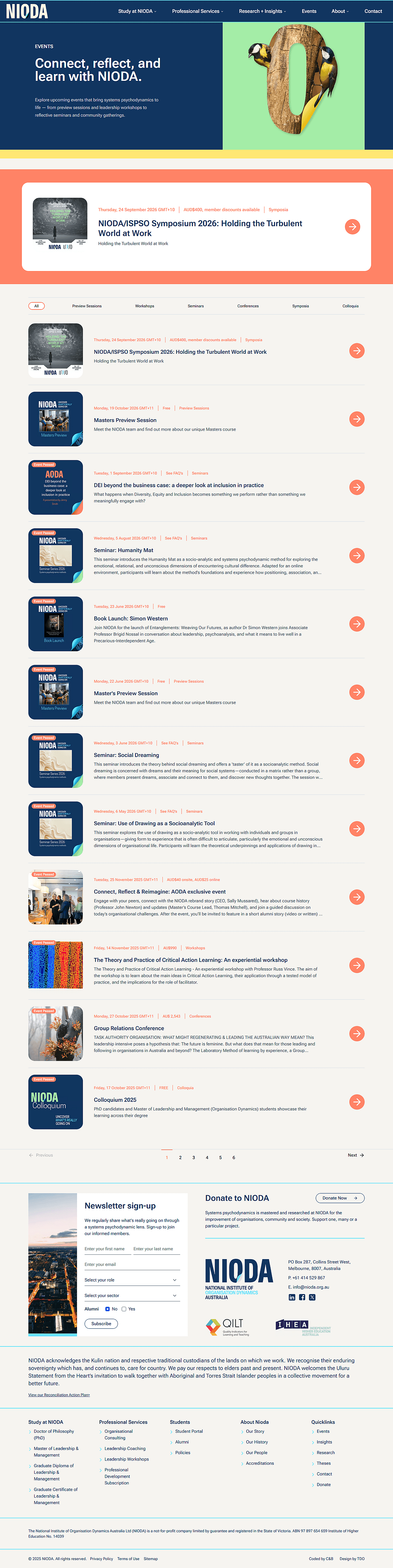
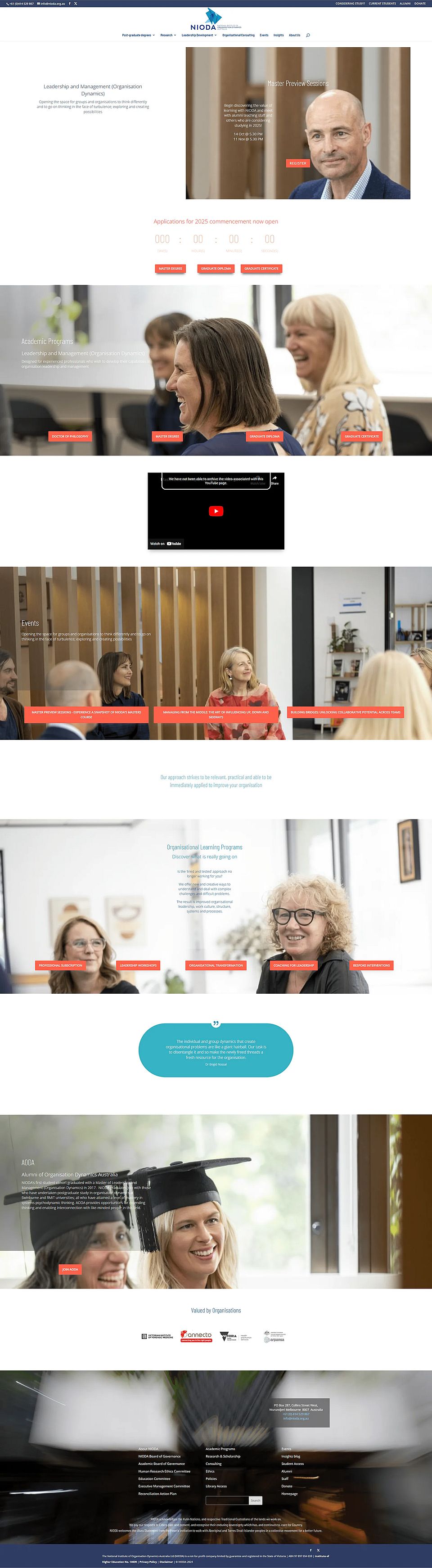
Same institute, new site.
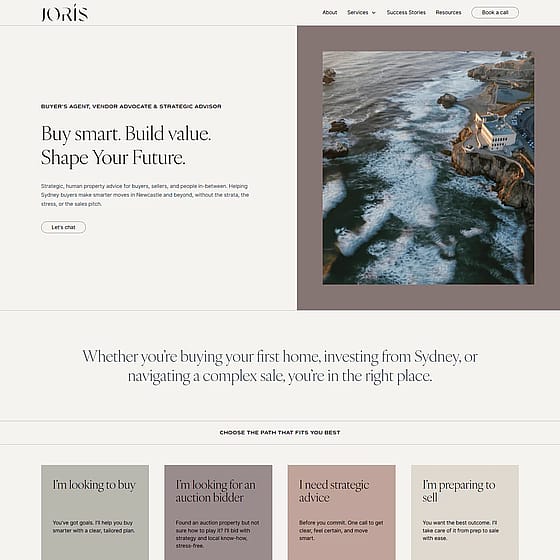
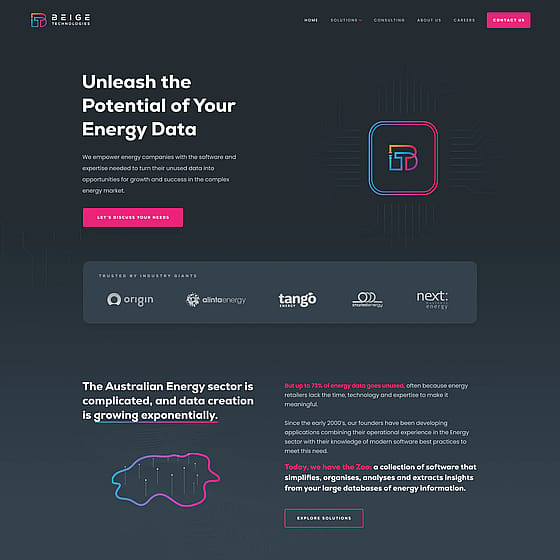
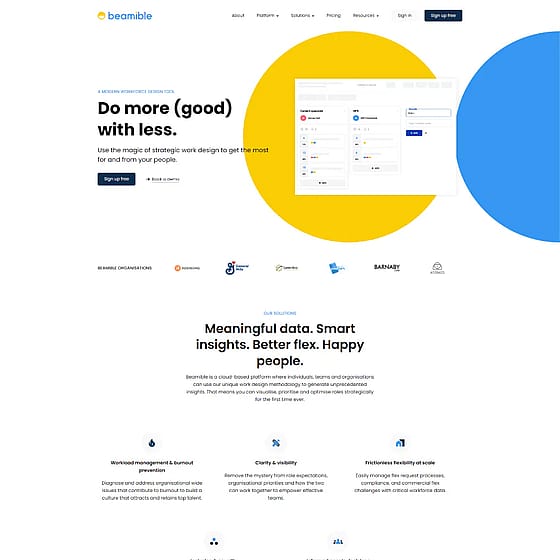
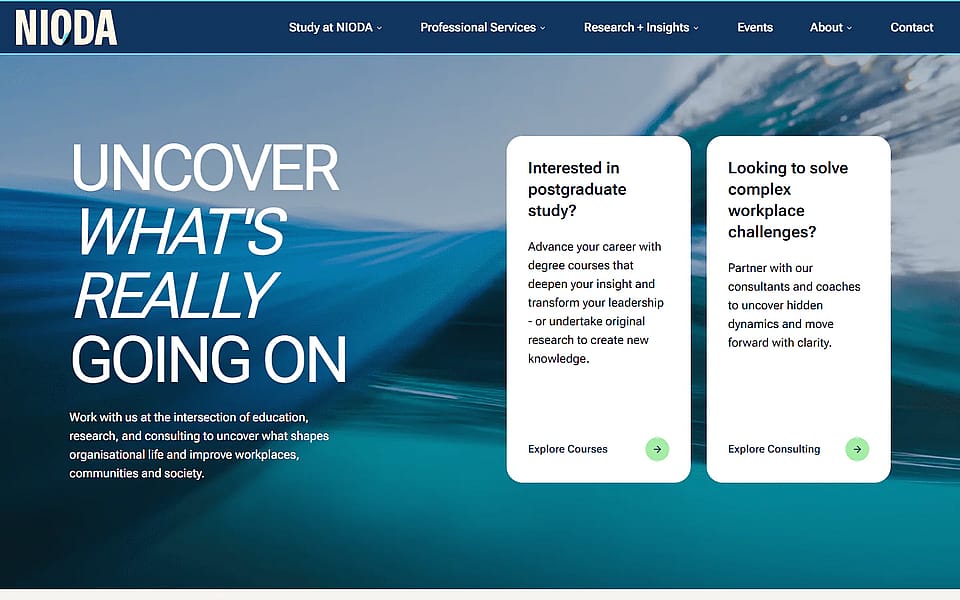
The old page-builder homepage next to the new one. The numbers are for the new site; the old one is gone, and its ten seconds is what it took when we first looked at it.
GTmetrix grade
- After
- A
Performance score
- After
- 98
First paint
- After
- 656ms
Fully loaded
- After
- 788ms
GTmetrix, September 2026, homepage. The WordPress site cannot be measured again.
The numbers.
1 → 4
people who can edit the site
391 changes published by NIODA staff since launch, none through us
0.8s
fully loaded
the WordPress site took ten seconds or more a page
221
pages and records
78 insights, 58 events, 45 faculty and staff profiles, 36 pages, 4 theses
40
page sections
courses, events, programmes and profiles built from the same editable blocks
133
redirects
every old WordPress address still lands somewhere
Content counts from the build. Editing counts from the site's change history, August 2025 to May 2026. Speed from GTmetrix, September 2026.
Theirs to keep.
The site lives in NIODA's own CloudCannon organisation and Cloudflare account. Every course, event, profile and insight is a file in their repository, so the content moves anywhere that reads a folder.
- SvelteKit
the site, pre-rendered
- CloudCannon
six collections, edited visually by four staff
- Cloudflare
hosting, the asset bucket and edge image resizing
- Pagefind
search, rebuilt on every deploy
- JotForm
enrolment and contact forms, embedded